

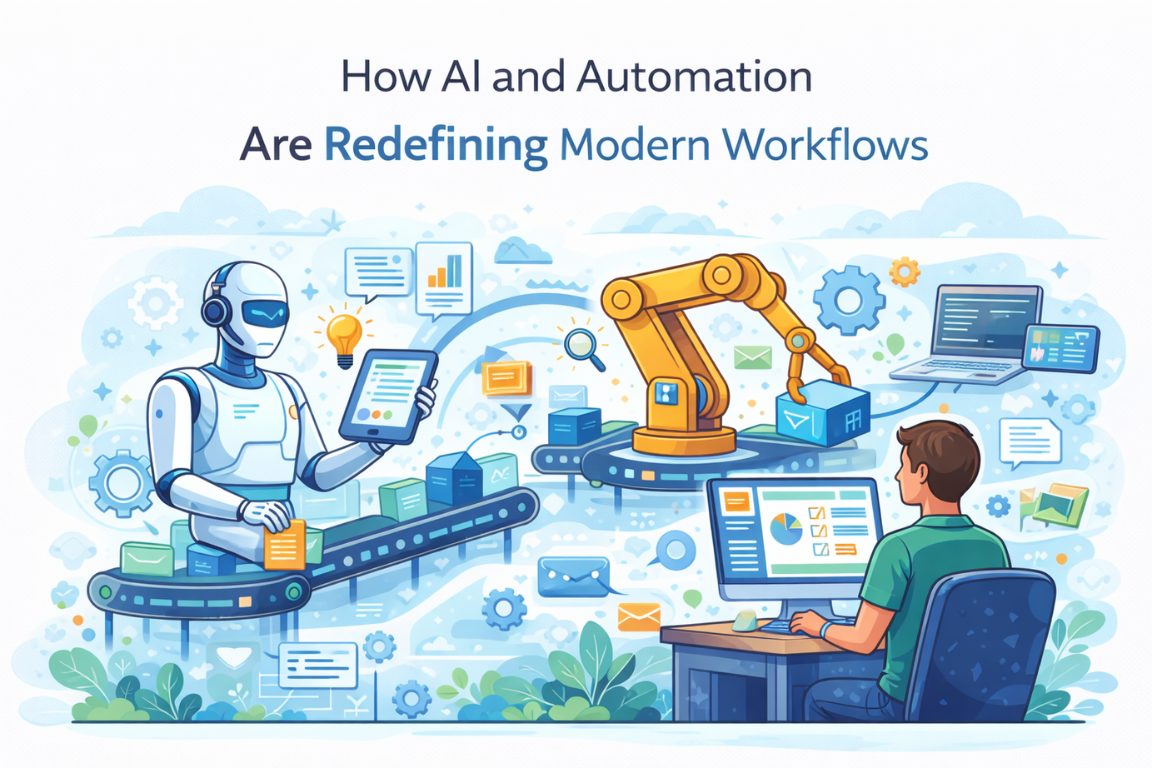
In today’s fast-paced world, the way we work is undergoing a dramatic transformation. Artificial Intelligence (AI) and automation are no longer futuristic concepts—they have become essential tools reshaping workflows across industries. From speeding up routine tasks to enabling smarter decision-making, these technologies are not just improving efficiency; they’re redefining the very nature of work itself.
Streamlining Repetitive Tasks
One of the most visible impacts of AI and automation is the elimination of time-consuming, repetitive tasks. Consider a marketing team that traditionally spends hours manually sorting through customer data. With AI-powered tools, this process is automated—segmenting audiences, analyzing behaviors, and even suggesting personalized content. This frees up human workers to focus on strategy and creative work, which adds more value to the business.
In manufacturing, robotic process automation (RPA) takes over repetitive assembly line tasks, reducing human error and increasing speed. For example, automotive factories now use robots for tasks like welding and painting, which were once labor-intensive. This not only boosts productivity but improves safety by removing workers from hazardous environments.
Enhancing Decision-Making with Intelligent Insights
AI isn’t just about automation; it’s equally about making data-driven decisions smarter and faster. Modern AI systems analyze vast amounts of information to uncover trends or predict outcomes that humans might miss. Financial institutions use AI algorithms to detect fraudulent transactions instantaneously, protecting customers and reducing losses.
Similarly, in healthcare, AI helps doctors by analyzing medical images and patient histories to provide diagnoses or treatment recommendations more quickly and accurately. These insights empower professionals to make better decisions, often with real-time data at their fingertips.
Improving Collaboration and Communication
Automation tools also simplify communication and collaboration, especially for remote or distributed teams. Platforms integrated with AI chatbots can answer common employee questions immediately, reducing the load on HR or IT departments. Project management software driven by AI can automatically assign tasks, prioritize deadlines, and even predict potential bottlenecks based on workflow patterns.
For example, an AI assistant might review a project’s status each day and send personalized alerts to team members about upcoming deliverables. This reduces miscommunication and keeps everyone aligned without constant manual check-ins.
Adapting to New Skill Sets and Workforce Roles
As AI and automation handle more routine tasks, the role of human workers shifts toward creativity, problem-solving, and emotional intelligence—skills machines cannot replicate. This calls for ongoing learning and adaptability. Companies are increasingly investing in upskilling their workforce to prepare employees for this evolving landscape.
For instance, data analysts are embracing AI tools to complement their work, using automated data preparation to dive deeper into interpretation and strategy rather than just compiling reports. Meanwhile, in customer support, representatives leverage AI insights to tailor conversations and resolve issues more efficiently.
Challenges and Considerations
While AI and automation bring numerous benefits, they also present challenges organizations must navigate. Ethical concerns about job displacement, data privacy, and decision transparency are top of mind. Successful adoption means balancing technology with human oversight, ensuring automation supports employees rather than replaces them.
Additionally, integrating AI systems requires careful planning around compatibility with existing software and workflows. Businesses that invest time in change management and clear communication are better positioned to gain from these advancements.
Looking Ahead: A More Intelligent Workflow
The future of work lies in the seamless integration of AI and automation into everyday tasks. Imagine a world where routine administrative work is fully automated, while humans focus on innovation and creativity. Collaborative AI assistants will help teams work smarter, anticipate client needs, and react swiftly to market changes.
Organizations embracing these technologies today will not only improve productivity but also unlock new opportunities for growth and employee satisfaction.
In summary, AI and automation are no longer optional add-ons—they are fundamental forces reshaping workflows across sectors. By automating repetitive tasks, enhancing decision-making, and fostering smarter collaboration, these technologies empower workers and organizations alike. Take a moment today to consider how embracing AI-driven tools could transform your work and open new possibilities for the future.