
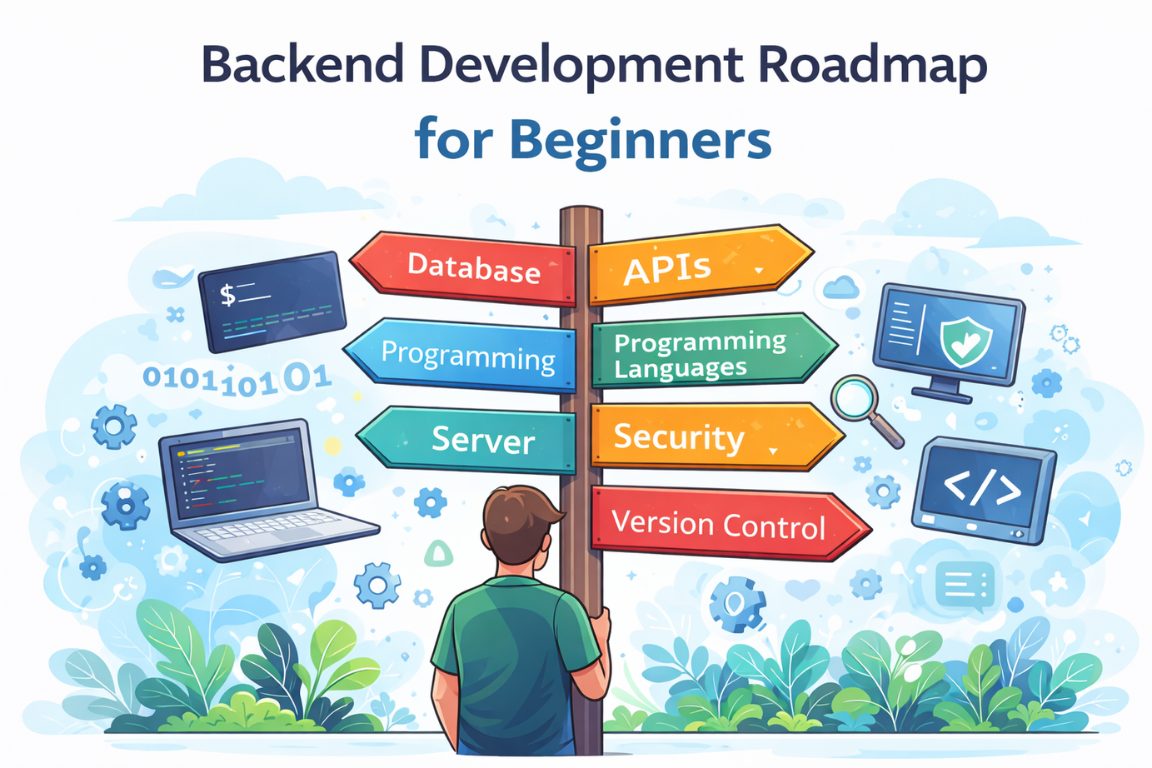
Starting a journey into backend development can feel overwhelming with so many programming languages, frameworks, and tools available. But like any craft, mastering backend development is about following a clear roadmap and building your skills step-by-step. Whether you want to build complex web applications, APIs, or manage databases, understanding the backend fundamentals is essential. This guide outlines the practical path beginner developers can follow to gain confidence and succeed in backend development.
Understand What Backend Development Is
The backend of a website or application is everything that happens behind the scenes — from storing data and processing logic to managing user authentication and server configuration. Unlike frontend development, which handles the visual part users interact with, backend focuses on functionality and data flow.
Imagine a simple online store: the frontend shows products and the cart interface, but the backend manages inventory, processes orders, and handles payments securely. Knowing this helps you appreciate why backend skills are critical to building functional and reliable applications.
Learn a Backend Programming Language
Choosing the right programming language is your first big step. Popular backend languages include:
- JavaScript (Node.js): JavaScript is versatile and widely used for backend via Node.js. It’s beginner-friendly if you’re already familiar with frontend JavaScript.
- Python: Known for its readability and simplicity, Python is an excellent choice for backend with frameworks like Django and Flask.
- Java: Robust and scalable, Java powers many enterprise-level applications.
- PHP: Common in web hosting environments and well supported for content management systems like WordPress.
Start by learning core syntax, control flow (loops, conditions), data structures (arrays, objects), and writing simple programs. Practice through coding exercises that require you to manipulate data and output results.
Master Backend Frameworks
Frameworks speed up development by providing structure and common tools. For beginners, select one framework to focus on initially:
- Express.js (for Node.js): Minimalistic and widely used for building APIs and web applications.
- Django (for Python): Batteries-included framework with built-in admin panel, authentication, and ORM.
- Spring Boot (for Java): Simplifies Java backend development with embedded servers and auto-configuration.
Using a framework will help you organize your code into models, views, controllers, or routers, making your projects maintainable and scalable.
Learn About Databases
Backend developers need to know how to store, fetch, and manipulate data. There are two main types of databases to understand:
- Relational Databases (SQL): Examples include MySQL, PostgreSQL. They organize data in tables connected by relationships.
- NoSQL Databases: Examples like MongoDB store data more flexibly, using JSON-like documents.
Learn how to write queries, design database schemas, and connect your backend application to a database. For example, practice setting up a user table in SQL and performing create, read, update, delete (CRUD) operations.
Get Comfortable with APIs and RESTful Services
Backend development heavily involves creating and consuming APIs (Application Programming Interfaces). REST (Representational State Transfer) is the most common style for web APIs.
Practice building simple REST APIs that allow clients to retrieve, add, or modify data. For example, create an API for a todo list application where users can create, update, or delete tasks.
Understanding HTTP methods (GET, POST, PUT, DELETE), status codes (200 OK, 404 Not Found), and how to handle requests and responses is crucial.
Learn About Authentication and Security Basics
Security is vital in backend development. Learn how to implement authentication methods such as sessions, cookies, and token-based authentication (e.g., JWT). Never store passwords in plain text; always hash them using secure algorithms.
Understand common vulnerabilities like SQL injection and cross-site scripting (XSS), and learn how to mitigate these risks through validation and sanitization.
Practice Using Version Control (Git)
Git is essential for tracking changes, collaborating, and managing project versions. Start by learning how to initialize repositories, commit code, create branches, and push to remote platforms like GitHub.
Regularly using Git will improve your workflow and prepare you for team projects.
Deploy Your Backend Application
Building an application locally is just the start. Learn how to deploy your backend to platforms like Heroku, DigitalOcean, or AWS. This includes setting up environments, managing databases in production, and monitoring your app.
Begin with simple deployments and gradually explore containerization (Docker) or continuous integration/continuous deployment (CI/CD) pipelines.
Build Real Projects
The best way to learn backend development is by building. Start with small projects like a blog API, user authentication system, or a simple e-commerce backend. Each project will strengthen your hands-on skills and reveal gaps in your understanding.
Share your code openly on GitHub and ask for feedback from developer communities.
Summary
Backend development may seem complex, but a structured approach can turn confusion into mastery. Focus first on learning a programming language and then progress through frameworks, databases, APIs, security, and deployment. Consistent practice and real-world projects will unlock your potential.
Ready to start your backend development journey? Pick a language today, build your first API, and share what you create. Your future in building powerful, efficient applications begins now.