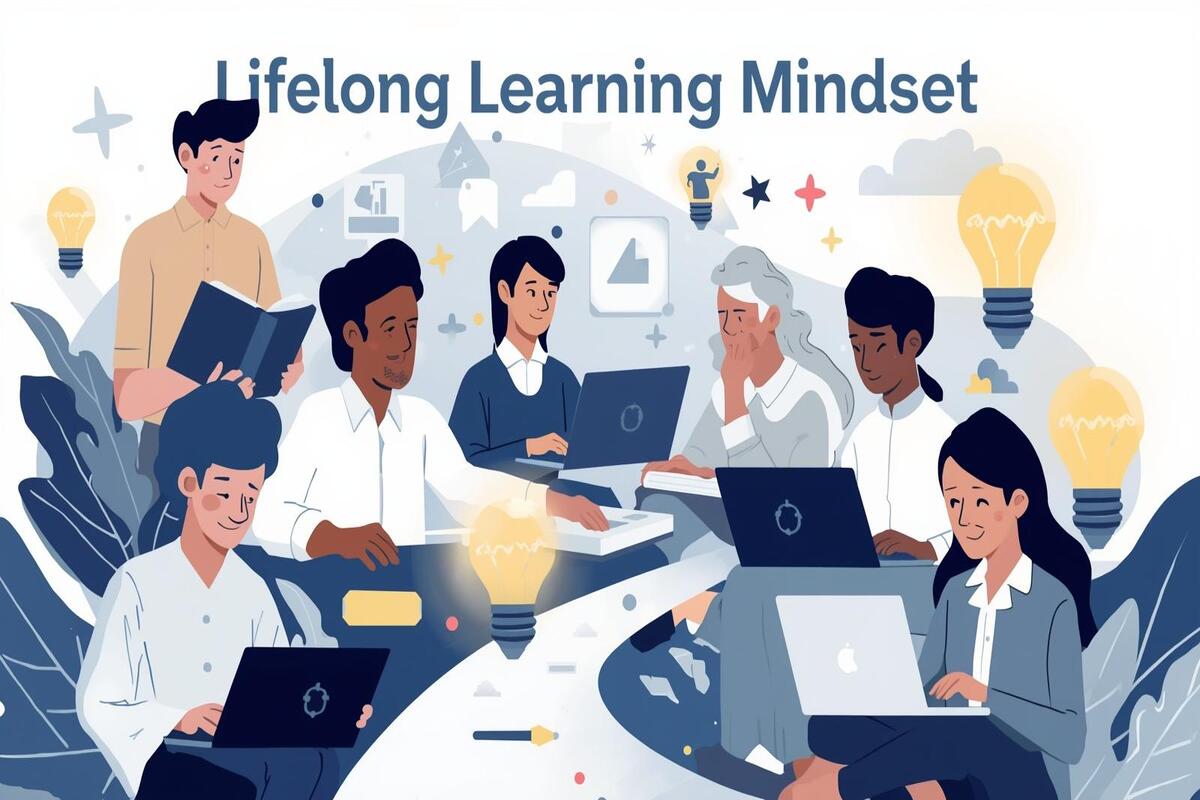
Lifelong Learning Mindset
Imagine being excited to learn something new every single day. Whether it’s picking up a digital tool, exploring a new perspective, or improving a small habit — that’s the essence of a lifelong learning mindset. In a world that changes faster than ever before, constant learning isn’t just helpful — it’s essential. And the best part? Anyone can develop this mindset, regardless of age, background, or profession.
What Is a Lifelong Learning Mindset?
A lifelong learning mindset is an ongoing, self-motivated pursuit of knowledge. It’s seeing learning not as a task that ends with formal education, but as a continuous journey. People with this mindset stay curious, adapt well to change, and are more comfortable facing uncertainty because they know they can learn what’s needed, when it’s needed.
This doesn’t mean enrolling in college courses every year. Lifelong learning can take many forms: reading a book, watching tutorials online, joining industry webinars, asking thoughtful questions, or even shadowing a colleague to pick up new skills. The learning never needs to stop.
Why It Matters More Than Ever
In industries like tech, healthcare, and education, knowledge evolves at a rapid pace. A framework or tool that’s trending today might be outdated within a year. For professionals, this can be both exciting and overwhelming. A lifelong learning mindset helps navigate this shift by turning change into an opportunity, not a threat.
For example, a software engineer who learns a new programming language before it’s mainstream may land ahead of the curve. Similarly, a teacher who explores emerging education technologies can better engage students and boost results. Continuous learning keeps you adaptive and relevant, no matter your field.
Practical Ways to Build the Mindset
Thinking like a lifelong learner doesn’t require a complete lifestyle change. Here are some practical actions that can help:
- Set small learning goals: Aim to learn one new concept, tool, or idea each week. It could be as simple as exploring a feature in an app you use daily.
- Create a learning routine: Block 15–30 minutes a day for focused learning. This could be reading an article, listening to a podcast, or completing a micro-course.
- Stay curious: Ask “why” or “how” more often. Instead of accepting things as they are, explore the background or the next step.
- Reflect on what you learn: At the end of the week, jot down what you’ve learned and how it might help you. Reflection strengthens retention.
Examples in Daily Life
Let’s say you’re in customer support. On a slow day, you decide to learn more about user experience design — just out of curiosity. Later, that knowledge helps you give better feedback to the product team, leading to a better app and happier customers. That’s the power of continuous learning.
Or consider someone transitioning careers. Instead of fearing the switch from marketing to data analytics, they dive into beginner-friendly courses and reach out to others in the field for insights. Over time, they gain the confidence and competence to pivot successfully — all because they kept learning.
Mindset Over Credentials
One of the biggest myths around learning is that it has to end with a certificate or degree. In reality, the ability to learn fast — and apply it meaningfully — often matters more than formal credentials. A growth mindset fuels innovation, while a static one limits progress.
Employers today increasingly value adaptability and problem-solving skills. Showing that you’re a self-driven learner can open doors beyond what’s listed in your resume. It signals that you’re prepared for the long-haul — as roles evolve and technologies shift, so will you.
Encouraging a Learning Culture
If you manage a team or work with others, cultivating a learning culture can magnify the benefits. Encourage open discussions around new ideas. Celebrate efforts to develop new skills. Share useful resources. This helps normalize learning as a core part of everyday work.
For organizations, supporting continuous learning boosts innovation, morale, and retention. A team that learns together, grows together.
Start Today
The best time to think like a lifelong learner is now. You don’t need a packed schedule of online modules or evening classes. All it takes is an open mind and a habit of steady curiosity. Over time, each small lesson adds up to powerful personal and professional growth.
So what’s one thing you could learn today? It might just be the first step toward unlocking a new level of potential — for you, your work, and your future.