

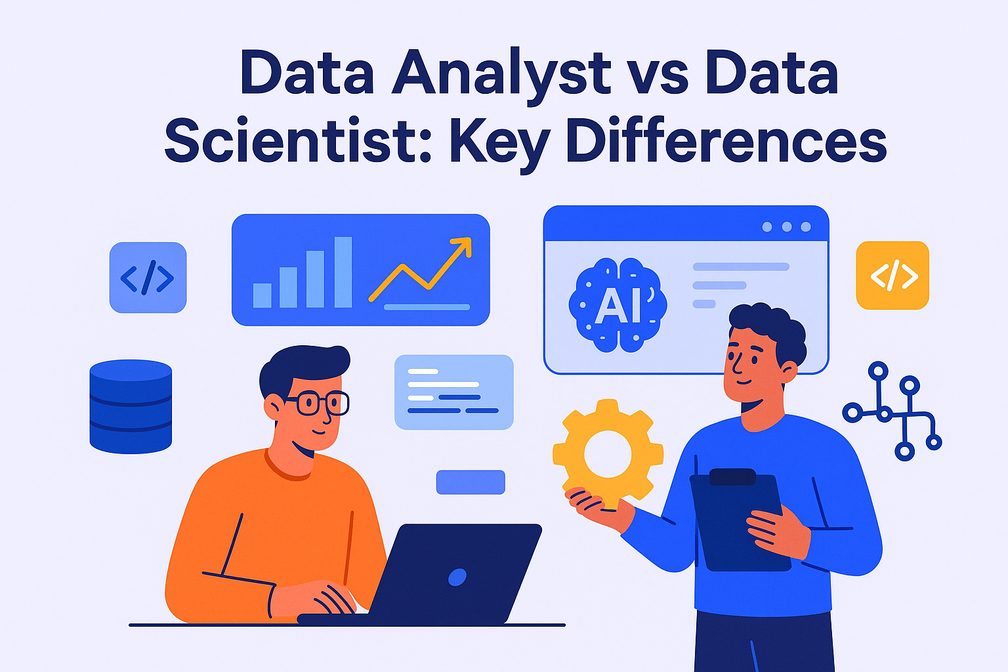
Data Analyst vs Data Scientist: Key Differences
In today’s data-driven world, the roles of data professionals have become increasingly important—and often, confusing. When organizations talk about harnessing data to make better decisions, two job titles often come up: Data Analyst and Data Scientist. Though they share common ground, these roles serve different purposes and require distinct skills. If you’re considering a career in data or trying to understand how these experts contribute to business success, knowing the key differences is crucial.
Understanding the Roles: At a Glance
Data Analysts are primarily focused on interpreting existing data to help companies make informed decisions. They extract, organize, and visualize data to identify trends, generate reports, and answer specific business questions.
Data Scientists, on the other hand, delve deeper by building advanced models and algorithms to predict future outcomes, automate decision-making processes, and uncover hidden insights from complex datasets.
Day-to-Day Responsibilities
Consider a retail company trying to understand yesterday’s sales. A Data Analyst might pull sales reports, segment customers by purchase behavior, and create dashboards illustrating which products performed best. Their work answers “what happened?” and “why did it happen?”
A Data Scientist takes this a step further by creating predictive models that forecast future sales trends based on seasonality, promotions, or external factors like market changes. They might build machine learning models that recommend pricing strategies or optimize inventory levels before problems arise. Their focus is more on “what will happen?” and “how can we influence it?”
Skills and Tools
Data Analysts often work with tools like Excel, SQL, and BI platforms such as Tableau or Power BI. They need a solid understanding of data cleaning, querying databases, and data visualization techniques. Strong communication skills are essential, as analysts translate numbers into stories that business teams can easily grasp.
Data Scientists require a more technical toolkit. Proficiency in programming languages like Python or R, along with knowledge of statistics, machine learning, and big data technologies (e.g., Hadoop, Spark) is common. They build complex algorithms and work with unstructured data, pushing the boundaries of what insights can be generated.
Educational Background and Experience
Both roles rely heavily on quantitative skills, but the paths often differ. Typically, Data Analysts have degrees in fields like business, economics, or statistics, and might enter the workforce with bachelor’s degrees or bootcamp training focused on analytics.
Data Scientists usually hold advanced degrees (Master’s or PhDs) in computer science, mathematics, or related fields given the deep technical knowledge required. However, industry experience and continuous learning can also pave the way into data science.
Impact on Business Decisions
Data Analysts play a vital role in monitoring ongoing business performance. Their reports highlight areas of strength or concern, empowering managers to make better day-to-day or tactical choices.
Data Scientists contribute to long-term strategic planning by developing data-driven products and automations that can transform an organization’s approach. For example, a data scientist might build a recommendation engine that increases online sales or develop fraud detection algorithms that protect financial transactions.
Real-World Example: Marketing Campaigns
Imagine a company launching a new marketing campaign. The Data Analyst evaluates historic campaign data, extracts customer engagement metrics, and reports on which channels yielded the highest returns. This analysis guides immediate budget allocation.
The Data Scientist might build a predictive model to identify which segments of customers are most likely to respond positively to the campaign in the future. They may also create A/B testing frameworks to continually optimize messaging based on real-time feedback.
Choosing the Right Path
If you enjoy crafting clear visuals, digging into spreadsheets, and telling stories based on past and current data, a Data Analyst role might suit you. It provides a strong foundation and often serves as a stepping stone into more advanced data roles.
If you’re fascinated by algorithms, programming, and the art of prediction, and you’re eager to build systems that automate decisions, data science offers a dynamic and challenging career path.
Summary
Both data analysts and data scientists are essential in unlocking the value of data, but their focus, skills, and goals differ. Analysts interpret and report on data to illuminate what has happened, while scientists build tools and models to predict and influence future outcomes. Understanding these distinctions can help businesses structure their teams effectively and help individuals target their careers strategically.
Are you leaning toward a career in data? Consider what excites you most about working with data—explaining patterns or predicting them—and start building the skills that align with your passion. The data world is vast and full of opportunities waiting to be discovered.